Every bag of borax sold in Great Britain has to carry a hazard label, and every professional buyer should receive a Safety Data Sheet (SDS) with it. Both documents use a compact code of pictograms, signal words and numbered statements that can look cryptic the first time you see them. This guide walks through a typical borax label line by line, then explains which sections of the Safety Data Sheet matter most for storing, handling and disposing of borax in a workshop, studio or lab.
The examples below are based on borax decahydrate (sodium tetraborate decahydrate), which is the form we supply as 99.9% pure borax powder. The same rules apply to the pentahydrate and anhydrous grades.
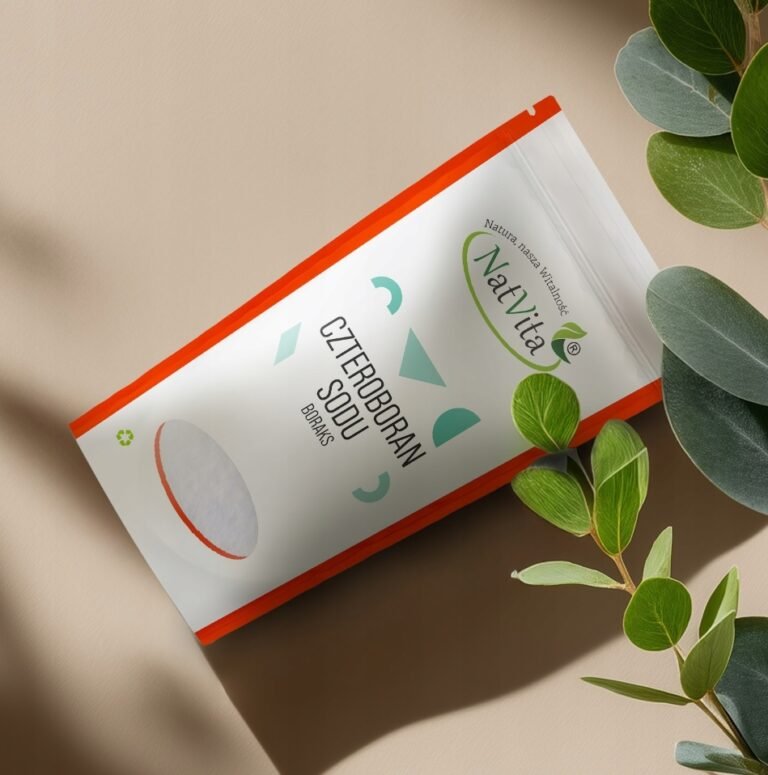
Why borax carries a hazard label
Under the GB CLP Regulation (the UK version of the EU Classification, Labelling and Packaging rules), disodium tetraborate in all three of its common forms has a mandatory classification of Reproductive toxicity, category 1B (Repr. 1B) with the hazard statement H360FD: may damage fertility; may damage the unborn child. That classification sits on the GB mandatory classification and labelling list maintained by the Health and Safety Executive, so suppliers cannot choose to label it differently.
The classification is also why borax is now supplied for professional, trade, industrial and laboratory use rather than as a general household product. If you want the legal background in more detail, read is borax legal in the UK?
The six parts of a borax label
A CLP label is built from the same set of elements on every hazardous chemical. Once you know what each one is for, you can read any borax pack in a few seconds.
1. Product identifier
This tells you exactly what is in the bag. For borax decahydrate you should see the chemical name and the identifying numbers:
- Name: disodium tetraborate decahydrate (also sold as borax, borax decahydrate or sodium tetraborate decahydrate)
- CAS number: 1303-96-4
- EC number: 215-540-4
Checking these numbers is the quickest way to confirm that a product is genuine borax and not a different cleaning powder with a similar name. Anhydrous borax and pentahydrate have their own CAS numbers, so the label also tells you which grade you are holding. Our guide to borax decahydrate vs pentahydrate vs anhydrous explains why the grade matters for recipe weights.
2. Hazard pictogram: GHS08
Borax carries a single pictogram: GHS08, the health hazard symbol. It is a black silhouette of a person’s upper body with a white star-shaped burst on the chest, inside a red-bordered diamond. GHS08 is used for serious long-term health hazards such as reproductive toxicity. It does not mean the powder is corrosive, flammable or explosive; those hazards have different pictograms, and borax carries none of them.
3. Signal word: “Danger”
CLP uses only two signal words. “Warning” is for less severe hazard categories, and “Danger” is for the more severe ones. Because Repr. 1B is a top-tier classification, borax labels use “Danger”.
4. Hazard statement: H360FD
Hazard statements describe the nature of the hazard. Borax has one:
- H360FD: May damage fertility. May damage the unborn child.
The letters at the end are worth knowing. “F” refers to fertility and “D” to development of the unborn child. Upper-case letters mean the effect is classified in category 1, which is why the statement reads “may damage” rather than the weaker “suspected of damaging”.
5. Precautionary statements (P-codes)
Precautionary statements tell you how to prevent harm and what to do if something goes wrong. A typical borax label or SDS lists these:
| Code | What it says | What it means in practice |
|---|---|---|
| P201 | Obtain special instructions before use. | Read the Safety Data Sheet before you open the bag. |
| P202 | Do not handle until all safety precautions have been read and understood. | Make sure anyone else using the borax has read them too. |
| P280 | Wear protective gloves, protective clothing and eye protection. | Nitrile gloves and safety glasses as a minimum when weighing or mixing. |
| P308+P313 | IF exposed or concerned: get medical advice or attention. | Take the label or SDS with you so the doctor knows what the substance is. |
| P405 | Store locked up. | A locked cupboard or store room, out of reach of children and pets. |
| P501 | Dispose of contents and container in line with local regulations. | Do not put bulk powder in household bins or drains; see the disposal section below. |
Some suppliers choose a slightly different selection of P-codes, because CLP allows a limited number on the label to keep it readable. The full list will always be in Section 2 of the Safety Data Sheet.
6. Supplier details
The label must give the name, address and telephone number of the company that placed the product on the GB market. This is who you contact if you need a copy of the SDS or have a question about the product.
What the “8.5%” figure on some data sheets means
On many borax data sheets you will see a note such as Repr. 1B; H360FD: C ≥ 8.5%. This is a specific concentration limit. It means a mixture containing 8.5% or more borax decahydrate must itself be classified and labelled as Repr. 1B. Below that level the mixture does not automatically carry the same classification for this hazard. Anhydrous borax and pentahydrate have lower limits, because they contain more boron per gram.
The figure matters mainly to people who make up their own solutions or mixtures for trade use: if you decant a mixture into another container, it may need its own hazard label.
Reading the borax Safety Data Sheet
A Safety Data Sheet always follows the same 16-section layout. You do not need to memorise all of it, but these sections are the ones to read before first use.
Section 2: Hazards identification
Repeats the classification, pictogram, signal word and the full set of H- and P-statements. If the label on the bag is damaged or missing, this section tells you what it should have said.
Section 4: First-aid measures
Explains what to do after contact with the eyes or skin, after breathing dust, or after accidental swallowing. Read it before you start work, not after an accident, and keep the SDS somewhere you can find it quickly.
Section 6: Accidental release measures
Covers spills. For a dry powder like borax this usually means avoiding raising dust, sweeping or vacuuming up the spill and collecting it in a closed, labelled container, and keeping it out of drains and watercourses.
Section 7: Handling and storage
The practical rules for day-to-day use. A typical borax SDS asks you to store it in its original container, tightly closed, in a dry, well-ventilated place, and away from strong acids and strong bases. Our borax grades guide covers why borax cakes in damp storage and goes chalky in very warm, dry conditions.
Section 8: Exposure controls and personal protection
Lists workplace exposure limits where they apply and the protective equipment to use: typically gloves, eye protection and, if dust cannot be controlled, suitable respiratory protection.
Section 13: Disposal considerations
Borax waste is generally treated as an inorganic waste containing dangerous substances. In practice, use up what you buy where possible, and take leftover powder to your local council’s household hazardous waste service or, for businesses, a licensed waste contractor. Do not pour bulk powder or concentrated solutions down the drain.
Section 14: Transport information
Borax decahydrate is not classified as dangerous goods for road, sea, air or rail transport. That is why it can be posted and couriered normally, and why borax delivered anywhere in the UK does not need special hazardous-goods shipping.
Section 15: Regulatory information
Records the legal restrictions on the substance. For borax this includes the REACH restriction on supplying Repr. 1B substances to the general public, and the listing of borates as substances of very high concern.
Safety checklist for borax powder
Whatever the label wording on your pack, the core rules are the same:
- Keep out of reach of children and store locked up.
- Keep away from pets, food, drink and animal feed.
- Wear gloves and eye protection when handling the powder or solutions.
- Do not ingest. Do not eat, drink or smoke while working, and wash your hands afterwards.
- Not for use on skin, on people or animals, or with food. Borax is not sold for slime, cosmetics, laundry or home cleaning.
- Avoid breathing dust: weigh and mix gently in a well-ventilated area.
- Do not use borax if you are pregnant or trying to conceive.
- Keep borax in its original labelled packaging. Never decant it into food containers or unlabelled jars.
If you need a laundry or household cleaning product, use a borax substitute, which is formulated for those jobs.
Buying correctly labelled borax in the UK
A legitimate UK borax supplier should provide a CLP-compliant label in English and a Safety Data Sheet. If a pack has no hazard pictogram, no “Danger” signal word or no supplier address, treat that as a warning sign about the product and its source.
Borax UK supplies borax decahydrate powder for professional, trade and laboratory use, with a Safety Data Sheet in every order. See the full borax range.
Frequently asked questions
What does H360FD mean on a borax label?
H360FD is the hazard statement “May damage fertility. May damage the unborn child.” The F stands for fertility and the D for development of the unborn child. It goes with borax’s classification as Repr. 1B under GB CLP.
What hazard symbol is on borax?
Borax carries the GHS08 health hazard pictogram: a person’s silhouette with a starburst on the chest, inside a red-bordered diamond. It comes with the signal word “Danger”.
Where do I find the Safety Data Sheet for borax?
Your supplier must provide one when they sell borax for professional use. Borax UK includes a Safety Data Sheet with every order. If you have lost it, contact the supplier named on the label for a copy.
Is borax classed as dangerous goods for shipping?
No. Borax decahydrate is not regulated as dangerous goods for road, rail, sea or air transport, so it can be sent by normal courier. It is still hazardous to health and must be labelled under CLP.
How should I dispose of leftover borax?
Do not put bulk powder in household bins or drains. Take it in a closed, labelled container to your local council’s household hazardous waste service, or use a licensed waste contractor if you are a business. Follow Section 13 of the Safety Data Sheet.
Why does my borax data sheet mention 8.5%?
That is the specific concentration limit for borax decahydrate. Mixtures containing 8.5% or more borax decahydrate must also be classified and labelled as Repr. 1B, H360FD.
Sources
- Health and Safety Executive, The GB mandatory classification and labelling list (GB MCL list)
- Health and Safety Executive, GB classification and labelling
- Labbox, Safety Data Sheet: di-sodium tetraborate decahydrate (identifiers, classification, specific concentration limit, P-statements, storage, disposal and transport sections)